
Celebrating Landscape Architecture Month: Q+A with Allison Marble, Landscape Architect at McAdams
In honor of Landscape Architecture Month, we sat down with Allison Marble, landscape architect at McAdams, to talk about her path into the profession, what landscape architects really do, and why designing places for people is at the heart of her work.
How did you first discover landscape architecture and land planning?
I started questioning how buildings interact with the rest of the environment while studying architecture at NC State University. I found myself wanting to design places surrounding the building and was drawn to the work landscape architecture students were doing at larger, system-based scales, thinking about how environmental, social and regulatory layers interact to shape places.
What did you originally think landscape architecture was?
At first, I thought it was primarily about planting design and aesthetics, essentially “decorating” the outdoors once the architecture was finished.
What surprised you once you started learning more about the field?
How much of a jack‑of‑all‑trades this profession requires you to be. Our role bridges the gap between the technical and the aesthetic to ensure all parts work in harmony. The value we bring is understanding the big picture and how all the disciplines involved in placemaking overlap.
When did you realize this was the right career path for you?
I realized in school I was consistently drawn to big‑picture thinking—understanding how land, infrastructure, policy and people intersect to create resilient and sustainable places.
From Internship to Full‑Time
What made your internship at McAdams stand out?
The diversity of projects I worked on, both in scale and type, really set it apart. Being exposed to so many different project conditions pushed me to be adaptable and helped me truly understand all the moving parts that go into completing a project.
What’s one thing you learned as an intern that still helps you today?
I used to think that ‘knowing your stuff’ meant handling challenges on your own. I learned that the most effective designers are the ones who know when to ask for help and who to go to for it. At McAdams, someone has almost always solved a similar puzzle before, and their perspective can turn a two‑hour struggle into a five‑minute fix.

Learning in Action
What does learning in action look like to you?
It looks like sitting in meetings with developers, engineers, architects, planners and municipal staff and watching a design evolve in real time. It’s the process of taking a creative vision and refining it through technical constraints and regulatory codes until it becomes a viable project.
Was there a moment or project where you felt yourself really grow?
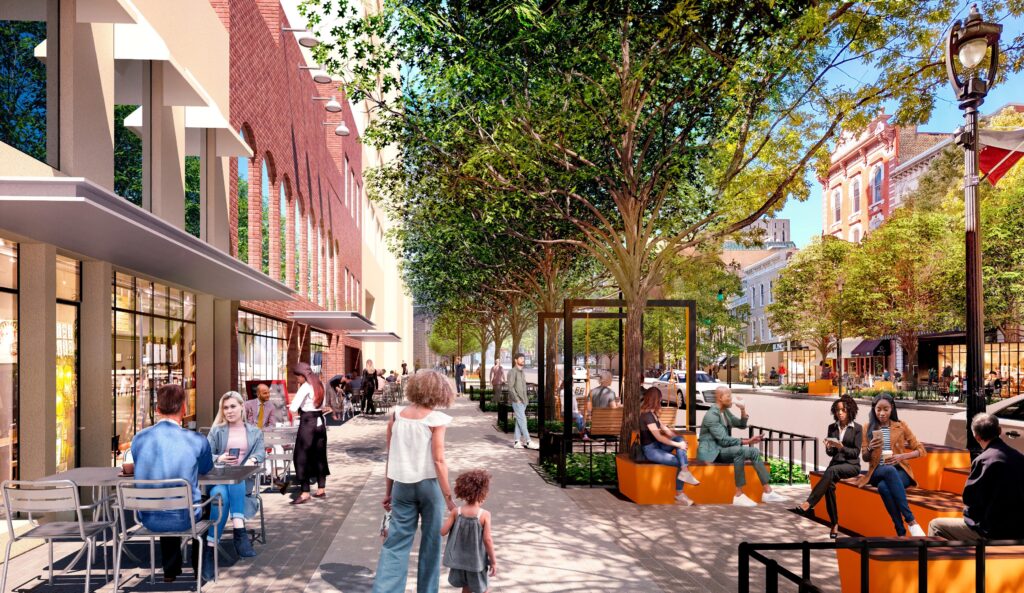
Working on policy changes and considerations for the Fayetteville Street Streetscape Plan. It was such a unique opportunity to dive deep into the regulatory environment and help shape the framework that will enable great urban design for years to come.
What’s something McAdams has taught you that school didn’t?
How interconnected everything truly is. Design almost never operates in isolation, and successful outcomes depend on understanding how different disciplines overlap.
Designing Places for People
What do you enjoy most about your role today?
Applying landscape architecture thinking at the land‑planning scale to help shape resilient, people‑focused places.
What types of spaces do you gravitate toward?
Urban spaces, especially. I really enjoy the intersection of human behavior and intentional design and thinking about how people move through and experience a place.
Busting Myths About Landscape Architecture
What’s a common misconception about landscape architecture?
That we’re “professional gardeners” who step in at the end of a project to add beautification or pick out flowers.
What’s one thing people don’t realize about the profession?
We’re essentially the designers of the civic living room. While architecture often focuses on private spaces, landscape architects design the public places where community happens—and we play a big role in fostering social connection and environmental equity.
Advice for the Next Generation
What should students or emerging designers focus on right now?
Go to the urban spaces you love and measure the human scale. I literally keep a tape measure on my keychain—how tall is that seat wall? How far apart are those trees? Understanding scale in the real world builds intuition that a textbook can’t teach.
Anything designers shouldn’t be afraid to do?
Share unfinished ideas. As a recovering perfectionist, I’ve learned that design intent doesn’t need to be fully polished to be valuable. Diagrams and markers are your best friend.
What mindset has helped you most in your career so far?
Stay curious. When you see every challenge as a lesson instead of a test, growth becomes a natural part of your everyday work.